

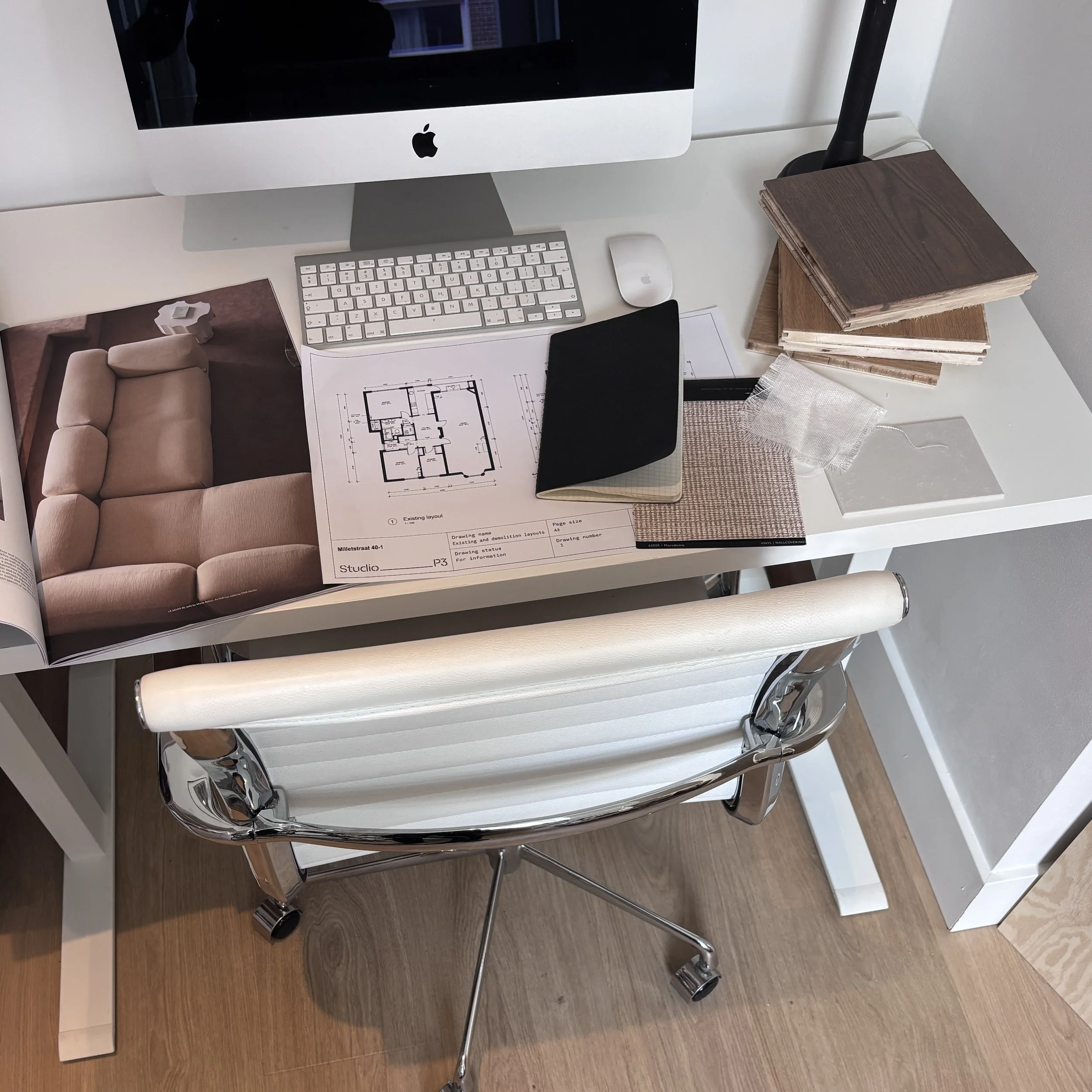
Before we draw anything, we spend time in the neighbourhood.
Not with a brief in hand or a mood board open. Just time. Walking the streets, sitting somewhere quiet, noticing what makes a place feel the way it does. That process is not separate from the design work. It is where the design work begins.
De Pijp is not a quiet neighbourhood. It has a particular energy that is difficult to ignore and easy to love. Markets pulling people through the streets, cafes full at every hour, noise and movement that feels genuinely alive. But it is also a neighbourhood that rewards you for slowing down. Look past the bustle and the detail is everywhere. In the buildings, the streets, the small places people keep returning to.
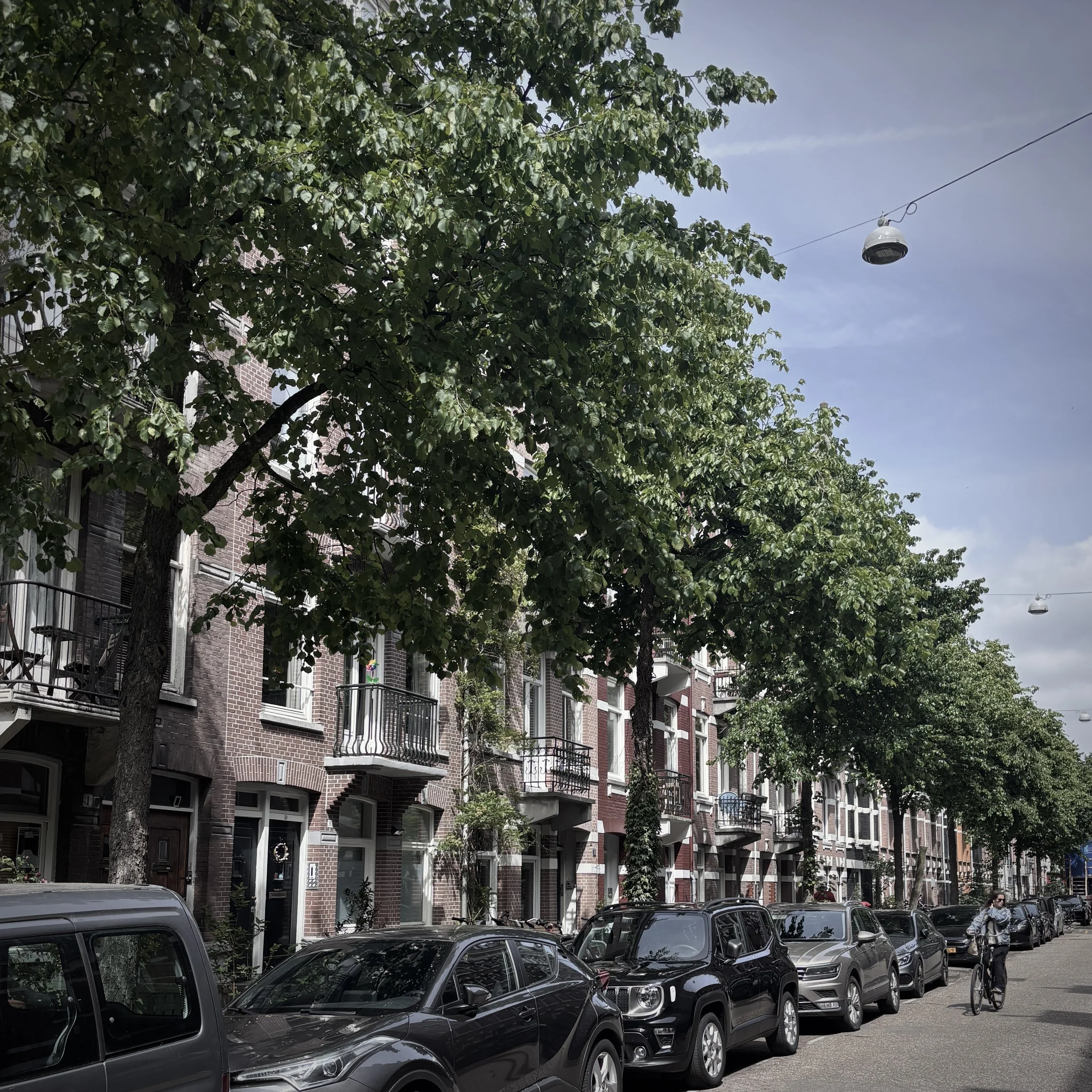
One of our favourite streets in De Pijp
Walk ten minutes toward the Amstel and something shifts entirely. The streets open up, the noise falls away, and the water brings a stillness that the neighbourhood itself does not have. That contrast is what De Pijp actually feels like to live in. And it was exactly what we needed to understand before we designed anything.
We spent a lot of time at Elevate, a cafe close to the apartment. It became a place to sit, pause, and let ideas settle. Watch the neighbourhood move past the window. Then walk to Peppi's around the corner, down toward the water, back again. That rhythm between energy and stillness are expressed in the final design through materials, forms and spatial flow.
The design language we arrived at came directly from that tension. Warm materials that carry the detailed character of the streets. Proportions and flow that feel considered and calm. It’s an apartment that, when you step inside, holds both things at once.
Connected to its context. Calm enough to come home to.
De Pijp pulls you in. The Amstel slows you down. The apartment needed to do both.
- Peta -
